
Hydronic Radiant Heating • Northern Michigan
Radiant Floor Heating in Northern Michigan.
Experience comfortable, even heat from the floor up. GeoFurnace helps homeowners plan hydronic radiant heating solutions using compatible boilers, geothermal systems, and air-to-water heat pumps.
Understanding Radiant Heat
Comfortable Heat From the Floor Up.
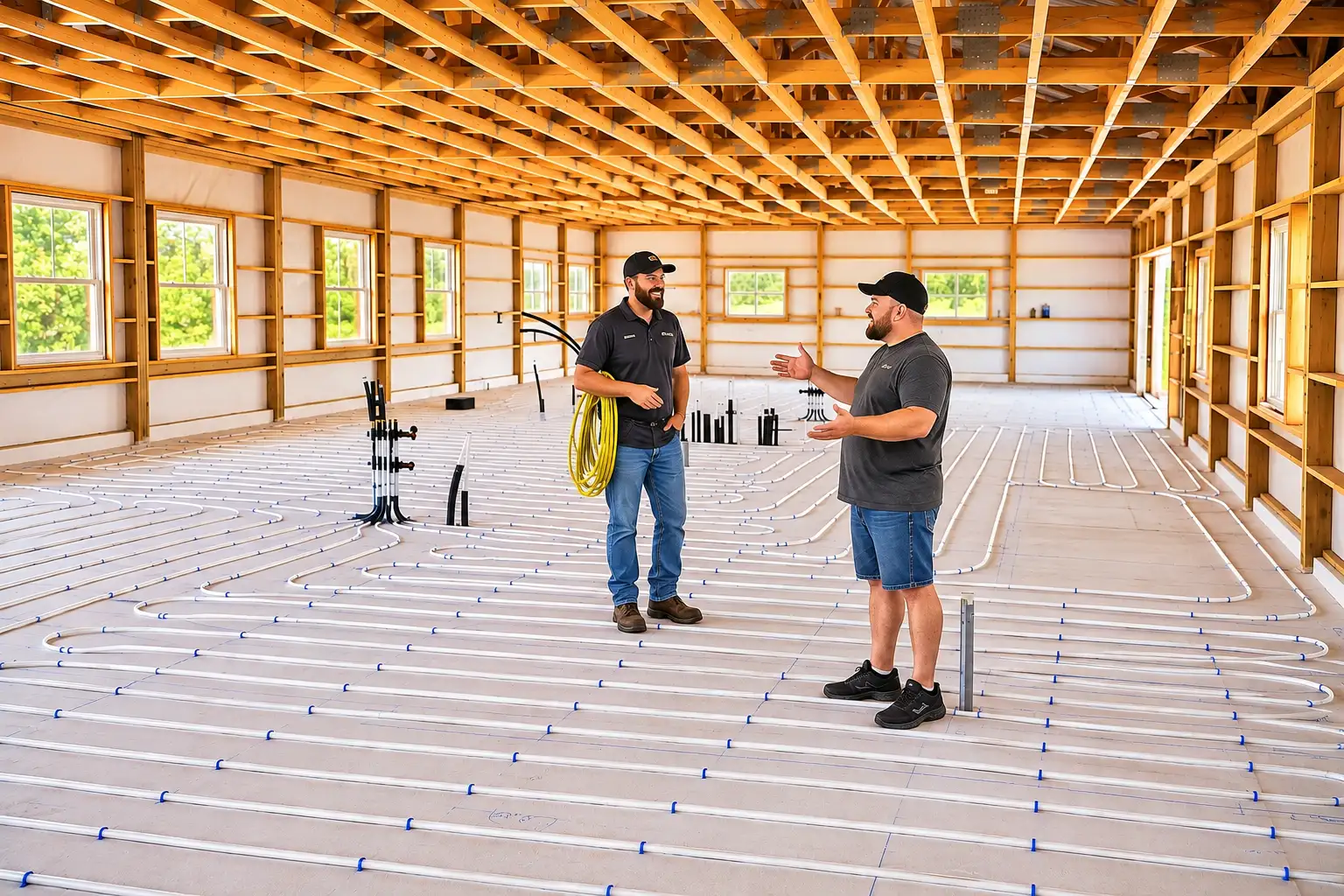
Radiant floor heating warms your living space through the floor, creating comfortable, consistent heat without relying entirely on forced-air delivery.
With hydronic radiant heating, warm water circulates through tubing installed within or beneath a compatible floor assembly. Heat transfers through the flooring and into the room.
This approach can work well in Northern Michigan homes, especially where homeowners want comfortable warmth from tile, concrete, or other suitable floor surfaces.
Radiant floors can be part of a whole-home heating design or serve selected rooms and zones, depending on the home's heat requirements and equipment.
Radiant tubing distributes warmth, but a separate compatible heat source must warm the circulating water. That may be a boiler, an appropriately configured air-to-water heat pump, or a water-to-water geothermal system. Not every existing heating system has that capability.
How a Hydronic Radiant System Works
A Heat Source Warms the Water
A compatible boiler, heat pump, or geothermal system heats water to the temperature needed by the radiant floor.
Warm Water Circulates
Circulation pumps move the heated water through the tubing. Manifolds, valves, and controls regulate water flow through individual zones.
The Floor Transfers Heat
Heat moves through the flooring assembly, warming the surface and transferring energy into the living space.
The Room Stays Comfortable
A properly designed system maintains comfortable temperatures through coordinated heating, zoning, insulation, and thermostat controls.
That's one of the most important questions to answer before planning a radiant floor project. Some systems can be adapted, while others require additional equipment or a different approach. We'll explain the major heating-source options next.
Understanding Your Heating Options
What Can Power a Radiant Floor Heating System?
Radiant floors need a compatible source of heated water. Several types of equipment can provide that heat, but not every existing system can be connected directly to radiant tubing. The best option depends on your home, heating requirements, and equipment.
Boiler Heating Systems
Boilers are a well-established way to supply heated water for hydronic radiant floors. Both new and certain existing boiler systems may be suitable, depending on their capacity and configuration.
Adding radiant zones to an existing boiler may require circulation pumps, manifolds, temperature-mixing controls, valves, or other equipment. Radiant floor temperatures must be appropriate for the flooring and the system design.
Existing boiler compatibility must be evaluated. Learn About Boiler ServiceMitsubishi Air-to-Water Heat Pumps
Mitsubishi Electric offers air-to-water heat pump technology designed for compatible hydronic heating applications, including radiant floors.
Unlike a conventional air-to-air mini-split, an air-to-water heat pump transfers heat into water that can circulate through appropriately designed radiant heating equipment. Specific models, available capacity, cold-weather performance, and system requirements must be reviewed.
A typical Mitsubishi mini-split cannot directly supply radiant floor heating water. Explore Heat Pump OptionsWater-to-Water Geothermal
Compatible geothermal heat pumps can provide heated water for hydronic radiant floors. Water-to-water geothermal equipment is specifically designed for water-based heating applications.
Not every geothermal system includes this capability. A conventional water-to-air geothermal heat pump primarily heats air, so a radiant-floor project may require different or additional equipment.
WaterFurnace offers geothermal equipment designed for radiant heating applications. Explore Geothermal HeatingExisting Outdoor Wood Boilers
Some outdoor wood-fired boiler systems can provide heated water for hydronic radiant floors when connected through appropriately designed heat-transfer, circulation, and temperature-control equipment.
These projects depend on the existing installation, operating temperatures, heat exchangers, water quality, and other system requirements.
GeoFurnace does not sell outdoor wood boilers. Homeowners with existing outdoor wood systems can contact us to discuss their radiant heating needs and determine whether the proposed work falls within our services.
Existing equipment and project scope are reviewed individually.Before You Add Radiant Heat
Already Have a Heating System? Let's See What's Possible.
Your current heating equipment may or may not be suitable for radiant floors. A forced-air furnace or conventional air-to-air mini-split cannot directly circulate heated water through hydronic tubing.
Some boilers and geothermal installations can be adapted. Other homes may need an additional heat source, changes to the existing hydronic system, or a different equipment configuration.
GeoFurnace considers the heating load, existing equipment, distribution needs, and available installation options before recommending a direction.

The Comfort of Radiant Heating
Comfort You Can Feel. From the Floor Up.
There's something different about stepping onto a comfortably warm floor on a cold Northern Michigan morning.
Hydronic radiant floor heating delivers warmth through the floor itself, helping create comfortable, consistent indoor temperatures.
Whether you're building a new home or improving an existing space, radiant heating may be an option worth exploring.
The key is understanding what's possible with your home's floor construction, heating equipment, and overall heating requirements.
A Different Approach for Every Home.
Radiant floor heating can be incorporated into new construction or considered for existing homes. But the installation process, equipment needs, and cost can be quite different depending on the project.
Not Every Home Is a Simple Retrofit.
Installing radiant heating in an existing home can involve more than adding tubing. Floor coverings, structural conditions, insulation, available space, and water-temperature requirements all affect the project. A home's current furnace, mini-split, boiler, or geothermal system may also require additional equipment or modifications. GeoFurnace can evaluate the heating requirements and discuss the options that make sense for your project.
Radiant Heating System Design
Properly Designed Radiant Heat Starts With Your Home.
A comfortable radiant floor heating system needs more than tubing and a source of warm water. Equipment selection, heating capacity, floor construction, insulation, and controls must work together.
At GeoFurnace, we emphasize evaluating the home's actual heating requirements before recommending equipment. That's especially important with hydronic radiant heating, where the system must deliver enough warmth without exceeding the floor's appropriate operating temperature.
Heat-Loss Calculations
Every home loses heat differently. Insulation, windows, construction, room size, and Northern Michigan winter conditions influence the heating load. Proper calculations help determine how much heat the system needs to deliver.
Compatible Heating Equipment
Boilers, air-to-water heat pumps, and water-to-water geothermal equipment have different operating characteristics. The selected equipment must have suitable heating capacity and the ability to supply the required water temperature.
Water Temperature & Flow
Radiant floors often operate at different water temperatures than conventional hydronic baseboard heating. Proper circulation, water-temperature control, and distribution design help maintain comfort and protect the floor assembly.
Flooring & Construction
Concrete slabs, subfloors, wood flooring, tile, and other floor coverings transfer heat differently. Floor construction, material compatibility, tubing placement, and covering thickness all affect the heating design.
Zoning & Controls
Properly configured manifolds, circulation pumps, thermostats, and control valves help direct heat where it's needed. Zoning requirements depend on the home's layout, equipment, and individual room heating needs.
Insulation & Heat Retention
Heat should move into the occupied space, not be unnecessarily lost into the ground or surrounding structure. Insulation beneath and around applicable floor assemblies can play an important role in overall performance.
The GeoFurnace Approach
We Don't Believe in Guessing at Heating Design.
A radiant floor heating system needs to be matched to the home's heating load and the equipment supplying the heated water.
Too little heating capacity can leave rooms uncomfortable. Poor water-temperature control, circulation, or floor design can also create performance problems. Simply choosing larger equipment doesn't solve these issues.
GeoFurnace takes a system-focused approach, considering the home's conditions and available heating technologies before recommending a solution. The scope of any required piping, flooring, or equipment changes is determined for the individual project.
- Home heating requirements
- Existing equipment compatibility
- Water temperatures & circulation
- Flooring, controls & insulation
Why Choose GeoFurnace
Radiant Heating Solutions. Backed by Decades of Experience.
GeoFurnace has served Traverse City and Northern Michigan since 1990. With experience across multiple heating technologies, our team helps homeowners understand their options before making an investment in radiant floor heating.
Serving Northern Michigan Since 1990
Heating homes in this region means understanding long winters, changing temperatures, and the importance of dependable comfort. GeoFurnace brings decades of heating and cooling experience to conversations about radiant floor heating.
More Than One Heating Option
Radiant floors can be powered by different types of equipment. Our experience with boiler heating, geothermal systems, and heat pump technology helps us evaluate compatible options rather than assuming the same solution works for every home.
Recommendations Based on Your Home
We emphasize evaluating the home's heating requirements, existing equipment, and system limitations. Whether radiant heating is being considered for new construction or an existing home, the right recommendation begins with understanding the project.
Wondering If Radiant Heat Is Right for Your Home?
Tell us about your home, your existing heating equipment, and what you'd like to accomplish. We'll help determine the appropriate next step.
Common Radiant Heating Questions
Radiant Floor Heating Frequently Asked Questions.
Wondering whether radiant heat will work with your existing system, what it takes to install, or how much it might cost? These answers can help you plan your next step.
Can radiant floor heating work with my existing furnace or boiler?
A conventional forced-air furnace cannot directly provide the heated water needed for a hydronic radiant floor. Depending on the home, a separate compatible heat source may be required.
Some existing boiler systems can accommodate radiant heating zones, but additional pumps, mixing controls, manifolds, or other modifications may be necessary. Equipment capacity and system design must be evaluated first.
Can radiant floor heating be installed in an existing home?
Often, yes. However, the practicality of retrofitting radiant heating depends on floor construction, available installation access, insulation, floor coverings, and the existing heating system.
Some projects can be planned around renovations or accessible floor framing. Others may require substantial flooring work and additional heating equipment. GeoFurnace can help evaluate the heating-system requirements for your project.
Can a Mitsubishi heat pump provide radiant floor heating?
Certain Mitsubishi Electric air-to-water heat pumps are designed to supply heated water for compatible hydronic heating applications, including radiant floors.
These systems are different from conventional air-to-air mini-split heat pumps. An existing Mitsubishi mini-split should not be assumed to support radiant floor heating. The equipment model, operating requirements, and home heating load must be evaluated.
Can geothermal heating work with radiant floors?
Yes. Compatible water-to-water geothermal heat pumps can produce heated water for hydronic radiant floor systems.
Not every geothermal installation includes this capability. A water-to-air geothermal system primarily heats air, so additional or different equipment may be required. Visit our Geothermal Heating & Cooling page for more information.
What types of flooring work with radiant heat?
Hydronic radiant heating can work with a range of compatible flooring materials, including concrete, tile, certain engineered wood products, and some other finishes.
Material thickness, insulation, floor assembly design, and manufacturer temperature limits matter. Not every floor covering is appropriate for every radiant system, so compatibility should be checked during planning.
How much does radiant floor heating cost to install?
Installation costs vary significantly based on the heated floor area, new construction versus an existing-home retrofit, heating equipment, hydronic tubing and distribution requirements, controls, and labor.
A small addition using a suitable existing heat source may be very different from a project that requires new heating equipment and extensive floor work. GeoFurnace can discuss your project and determine the appropriate next step toward a proposal.
Let's Talk About Your Project
Ready to Explore Radiant Floor Heating?
Whether you're building a new home, renovating an existing space, or wondering if your heating equipment can support radiant floors, GeoFurnace can help you explore the options.
- New Construction: Planning hydronic radiant heating for a new home, addition, or major renovation.
- Existing Homes: Exploring whether radiant floors are practical for a room, basement, or existing living space.
- Heating Equipment: Questions about boilers, geothermal systems, air-to-water heat pumps, or existing hydronic equipment compatibility.
24/7 emergency HVAC service is available. Radiant heating project consultations are handled through normal scheduling.
Considering new heating equipment for your project? Financing options may be available for qualifying installations.
Explore Financing OptionsTell Us About Your Project
Share a few details about your home and what you're considering. Our team can follow up to discuss the appropriate next step.