Home Performance & Energy Assessments
Home Performance Testing for Northern Michigan Homes
Stop guessing why your home feels uncomfortable.
Cold rooms, unwanted drafts, uneven temperatures, or energy bills that seem too high? The problem isn't always your furnace or air conditioner. GeoFurnace takes a whole-home approach to understanding air leakage, airflow, insulation concerns, and HVAC performance before recommending improvements.
Signs of Home Performance Problems
Your Home Shouldn't Be Working Against You.
You turn up the heat, but one bedroom stays cold. You adjust the thermostat, but another room gets too warm. Your energy bills rise, yet the house still doesn't feel comfortable.
These problems don't always mean your furnace or air conditioner needs replacing. Air leakage, insulation, ductwork, and other building conditions can contribute to poor comfort and inefficient operation.
Long Winters Can Expose Hidden Comfort Problems.
Cold outdoor temperatures, wind, snow, and extended heating seasons can make air leakage and inadequate insulation especially noticeable. Understanding how your home performs through the seasons can help guide worthwhile improvements.
One Room Is Always Cold
A bedroom that never warms up, or an upstairs space that's uncomfortable in summer, may point to insulation, air leakage, airflow, or HVAC distribution issues.
Potential factors: Insulation, air leakage, airflowDrafts You Can Feel
Cold air near windows, doors, outlets, or exterior walls may indicate gaps in the home's air barrier. Some significant air leaks are hidden in attics and other unfinished spaces.
Potential factors: Air sealing, weatherstrippingHeating & Cooling Bills Keep Climbing
Energy costs are affected by weather, utility rates, household use, and equipment efficiency. But excessive air leakage and poorly insulated areas may also make your HVAC system work harder.
Potential factors: Heat loss, air leakage, equipmentCold Floors & Chilly Lower Levels
Floors that feel uncomfortably cold, particularly above crawlspaces or unconditioned areas, may indicate air leakage, insulation deficiencies, or other building envelope concerns.
Potential factors: Floors, rim joists, crawlspacesYour HVAC System Runs Too Often
A system that seems to run constantly, or cycles unusually often, deserves a closer look. Equipment operation, thermostat settings, sizing, airflow, and heat loss may all contribute.
Potential factors: HVAC sizing, airflow, heat lossIce Dams Along the Roofline
Recurring ice dams can sometimes be associated with unwanted heat reaching the roof deck. Attic air leakage, insulation, ventilation, and roof conditions may all need to be considered.
Potential factors: Attic heat loss, insulation, ventilationBefore Replacing Equipment, Understand What's Causing the Problem.
A home performance assessment can help distinguish building envelope concerns from HVAC performance issues. Diagnostic methods such as blower door testing can measure air leakage and help guide further investigation. The goal is to identify potential causes before committing to expensive improvements that may not solve the problem.
Home Performance Diagnostics
Measure the Problem Before Recommending the Solution.
A home can lose conditioned air through openings you can't easily see. Attic penetrations, rim joists, plumbing openings, and gaps around windows or doors can all contribute to unwanted air movement.
Professional blower door testing provides a measurable way to evaluate a home's overall air leakage. Combined with an understanding of the home's HVAC system and building conditions, these findings can help guide the next steps.
-
Start With the Home's Comfort Problems
Before testing, it's important to understand where the home feels drafty, which rooms have uneven temperatures, and whether heating or cooling costs seem unusually high.
Building conditions, equipment operation, and appropriate safety considerations help determine the scope of the evaluation.
-
Measure Air Leakage With a Blower Door
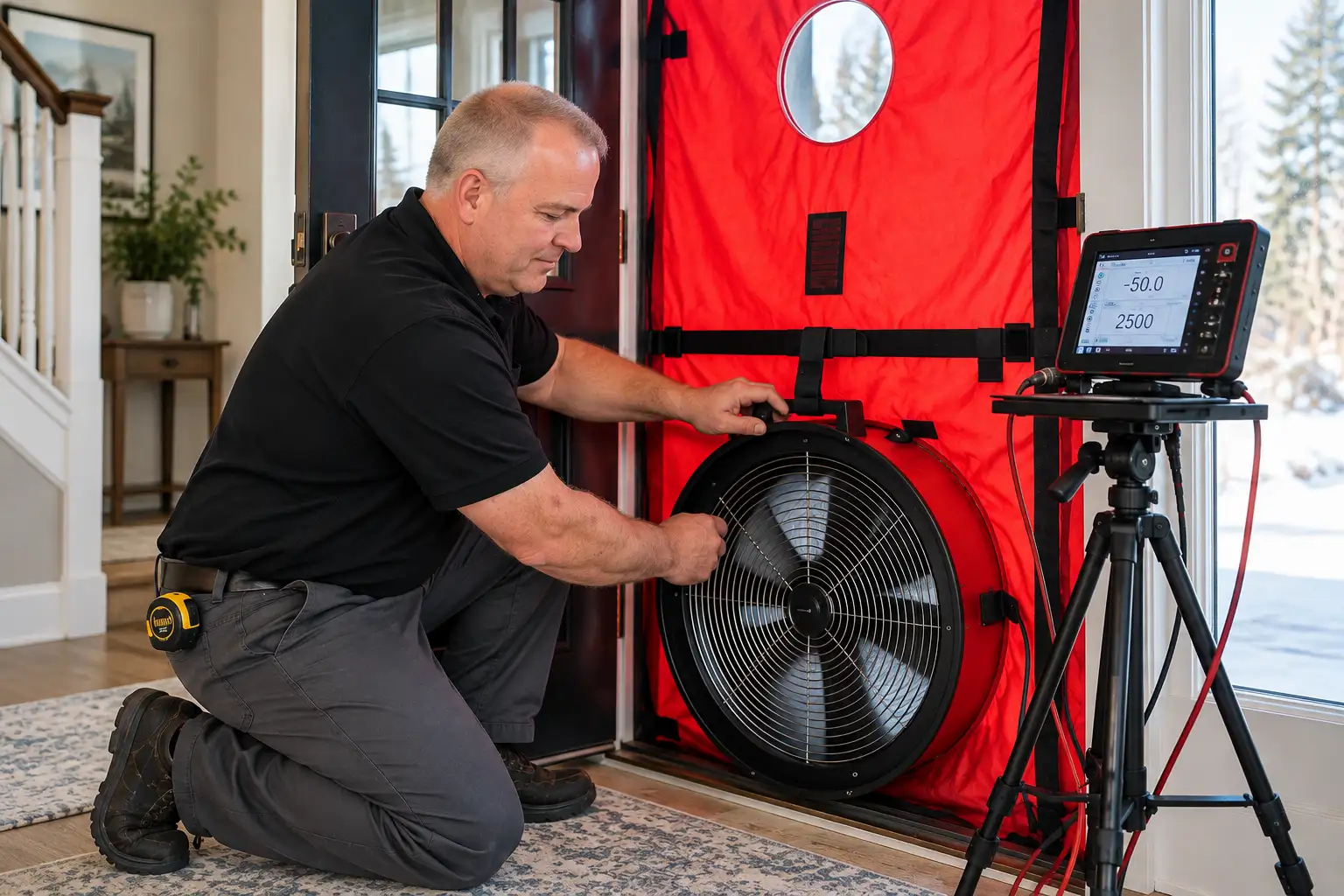
A calibrated blower door fan is installed temporarily in an exterior doorway. With the home properly prepared for the test, the fan creates a controlled pressure difference between indoors and outdoors.
The equipment measures the airflow needed to maintain that pressure difference. This provides a quantitative indication of the home's overall airtightness.
-
Interpret the Findings and Identify Next Steps
Air leakage measurements can help determine whether further investigation or air-sealing improvements may be worthwhile.
Additional inspection or diagnostic methods may be needed to locate individual leaks or distinguish insulation, ductwork, and HVAC performance concerns. The goal is to address actual contributing factors, not simply replace equipment.
Why Does This Matter for Heating & Cooling?
Uncontrolled air leakage can affect heat loss in winter and heat gain in summer. That's relevant when evaluating why a home is uncomfortable or how much heating and cooling capacity it may need.
GeoFurnace emphasizes detailed heat-loss and heat-gain evaluations when recommending new HVAC equipment. Understanding the home's air leakage and building conditions can support that process, but a blower door test does not replace a complete heating and cooling load calculation.
Once You Understand the Problem, You Can Make a Better Improvement.
Some homes may benefit from targeted air sealing or improved insulation. Others may need HVAC airflow corrections, ductwork improvements, or properly sized heating and cooling equipment. The next step is understanding which improvements address your home's actual needs.
Home Performance Improvements
One Company. Whole-Home Solutions for Better Comfort.
Finding the source of a comfort problem is only the beginning. The next step is choosing improvements that address the conditions in your home—not simply replacing equipment or adding insulation without understanding the cause.
Through GeoFurnace Heating & Cooling and its Grand Traverse Insulation division, homeowners have access to both HVAC and building-envelope expertise.
Heating, Cooling & Insulation Expertise. Under One Roof.
Your home's insulation, air leakage, ventilation, and heating and cooling equipment all influence comfort and energy use. With Grand Traverse Insulation operating as part of GeoFurnace, we can approach those concerns from both sides of the equation.
GeoFurnace Heating & Cooling
Heating and cooling equipment, airflow, comfort concerns, heat-loss and heat-gain evaluations, and proper HVAC system sizing.
Grand Traverse Insulation
A dedicated GeoFurnace division providing air sealing, spray foam, attic and blown-in insulation, crawl space encapsulation, and ice dam solutions.
Visit Grand Traverse InsulationSolutions That Address the Actual Problem.
The right improvements depend on the home's existing conditions. Some projects involve reducing air leaks. Others require better insulation, moisture control, or HVAC adjustments. Often, the best results come from understanding how those factors interact.
Targeted Air Sealing
Grand Traverse InsulationUncontrolled air leaks around attic penetrations, rim joists, framing connections, and other building-envelope openings can contribute to drafts and unnecessary heat loss. Targeted air sealing helps control that unwanted movement, based on the areas identified during an evaluation.
Attic & Blown-In Insulation
Grand Traverse InsulationInadequate or uneven insulation can allow unwanted heat transfer through ceilings and other building assemblies. Grand Traverse Insulation can evaluate insulation coverage and determine whether attic improvements, blown-in insulation, and related air sealing may improve comfort and thermal performance.
Spray Foam Insulation
Grand Traverse InsulationSpray foam can provide insulation and air-sealing benefits in suitable building assemblies. It may be appropriate for certain existing-home improvements, crawl space applications, additions, and new construction. The right application depends on building conditions and the goals of the project.
Crawl Space Encapsulation
Grand Traverse InsulationA damp or poorly controlled crawl space can contribute to cold floors, unwanted moisture, and comfort concerns in the rooms above. Depending on conditions, encapsulation and related insulation or air-sealing improvements may help. Active water intrusion and drainage problems must also be addressed.
Ice Dam Evaluations & Improvements
Grand Traverse InsulationRecurring ice dams can signal a combination of attic heat loss, insulation deficiencies, air leakage, and roof conditions. Grand Traverse Insulation evaluates potential contributing factors and can recommend appropriate insulation and air-sealing improvements when those conditions are involved.
HVAC Airflow & Proper System Sizing
GeoFurnace Heating & CoolingNot every comfort issue originates in the building envelope. Heating and cooling equipment, system airflow, ductwork, and thermostat controls may also contribute. GeoFurnace evaluates heat loss and heat gain when recommending HVAC equipment, helping homeowners avoid improperly sized heating and cooling systems. Building improvements may also affect the home's HVAC requirements.
Start With What's Wrong, Not With a Shopping List.
Some homes need better air sealing. Others may benefit from improved insulation, moisture control, airflow adjustments, or properly sized HVAC equipment. Because GeoFurnace and Grand Traverse Insulation work under the same company, homeowners have access to a broader home-performance approach rather than treating every issue as an isolated problem.
Why the Whole-Home Approach Matters
A Better Answer Starts With the Whole Picture.
A cold bedroom doesn't automatically mean you need a bigger furnace. High energy bills don't necessarily mean your HVAC equipment is failing. And adding insulation without addressing significant air leaks may leave part of the problem unresolved.
GeoFurnace takes the time to consider the home's building conditions alongside the heating and cooling system. That helps identify improvements that make sense for the actual cause of the problem.
HVAC Knowledge Backed by Building-Envelope Expertise.
GeoFurnace Heating & Cooling and Grand Traverse Insulation bring complementary expertise to home comfort. That means insulation, air leakage, heating, cooling, and equipment sizing can all be considered as part of the same conversation.
Learn About Grand Traverse Insulation-
Understand the Problem First
We begin with the comfort concerns you're experiencing. Which rooms are uncomfortable? When do you notice the problem? Is it worse during very cold or hot weather? Understanding those patterns helps guide the next steps.
-
Consider the Building Envelope
Air leakage, insulation, moisture conditions, and other building characteristics can influence indoor comfort. With Grand Traverse Insulation's expertise, building-envelope improvements can be considered alongside HVAC solutions.
-
Evaluate HVAC Performance and Proper Sizing
Existing equipment, airflow, ductwork, and heating and cooling requirements all deserve attention. When recommending replacement equipment, GeoFurnace emphasizes detailed heat-loss and heat-gain evaluations rather than simply choosing the same size as the old system.
-
Recommend Improvements in the Right Order
The right next step may be air sealing, insulation, an HVAC repair, an airflow correction, or equipment replacement. Sometimes several improvements make sense together. We help explain the options so homeowners can make informed decisions without unnecessary upgrades.
Why Insulation Can Affect HVAC Equipment Sizing
Improving air sealing and insulation may reduce a home's heating and cooling loads. That can change the amount of heating or cooling capacity required to maintain comfortable temperatures.
This is why the sequence matters. If major building-envelope improvements are planned, they should be considered when evaluating new HVAC equipment. GeoFurnace's heat-loss and heat-gain evaluations help guide appropriate system sizing rather than relying solely on the capacity of existing equipment.
Better Information. Better Home Improvement Decisions.
Home performance projects vary because every house has different conditions, comfort concerns, and existing equipment. The next step is understanding what an assessment or improvement may involve and discussing the right approach for your home.
Home Performance Pricing
What Does Home Performance Testing Cost?
The cost of evaluating and improving your home's performance depends on what needs to be tested, the home's existing conditions, and the work required. GeoFurnace and Grand Traverse Insulation can help homeowners understand the scope of an evaluation and the improvements that may make sense.
Home Performance Assessment
Discuss the comfort or energy concerns you're experiencing and the type of evaluation your home may need. Confirm whether blower door testing and any additional diagnostics are included in the proposed scope.
Assessment scope, testing availability, and any applicable fee should be confirmed before scheduling. A blower door test is not necessarily included in every type of visit.
Ask About Home Performance TestingHome Performance Improvements
Air sealing, attic insulation, blown-in insulation, spray foam, and crawl space encapsulation are priced according to the actual project. Grand Traverse Insulation evaluates the areas involved, material requirements, accessibility, and existing building conditions before preparing an estimate.
Project-Specific EstimateThere is no single installed price that accurately represents every insulation or air-sealing project. The recommended work and its scope determine the estimate.
Request an Insulation EstimateThree Things That Affect the Cost.
Before comparing estimates, make sure you're comparing the same services and improvement scope. A basic comfort evaluation, a diagnostic blower door test, and a substantial insulation project involve different work and deliverables.
Evaluation & Diagnostic Scope
The cost of an assessment may depend on the diagnostic work requested, equipment used, time on site, and any reporting or follow-up included. Clarifying the scope is important before scheduling.
Home Size, Construction & Accessibility
A home's size, age, layout, attic access, crawl spaces, insulation, and existing HVAC configuration can affect both diagnostic work and potential improvements. Hidden conditions may also influence the scope.
Materials & Installation Work
The areas being improved, insulation materials, air-sealing requirements, moisture conditions, and installation access help determine the final project cost. Different homes may require very different solutions.
The Lowest Estimate Isn't Always the Best Value.
A lower price may reflect less testing, fewer areas being addressed, a different insulation material, or a smaller project scope. A useful estimate should explain what work is proposed, which concerns it is intended to address, and what is excluded. Identifying the right improvements first can help homeowners avoid investing in work that doesn't solve the underlying problem.
Have Questions About Your Home's Performance?
Whether you're interested in blower door testing, investigating drafts, improving insulation, or understanding HVAC performance, tell us what you're experiencing. We'll help you determine the appropriate next step and discuss the evaluation or estimate process.
Home Performance FAQs
Your Home Performance Questions, Answered.
Wondering whether your home needs better insulation, air sealing, HVAC improvements, or additional testing? Understanding how your home works can help you make better decisions about comfort and energy use.
These answers cover common questions about blower door testing, home energy concerns, insulation improvements, and GeoFurnace's approach to whole-home performance in Northern Michigan.
Still Have Questions?
GeoFurnace Heating & Cooling and Grand Traverse Insulation can help you explore HVAC and building-envelope improvements suited to your home.
What is a blower door test, and what does it measure?
A blower door test uses a calibrated fan temporarily installed in an exterior doorway to create a controlled pressure difference between the inside and outside of a home.
The equipment measures how much airflow is required to maintain that pressure difference. This provides a measurement of overall building air leakage and helps evaluate how airtight the home is. It is one diagnostic tool that may be included in a broader home performance assessment.
Will a blower door test tell me exactly where my home is leaking air?
Not by itself. A standard blower door measurement indicates the home's overall air leakage. It does not automatically identify the location of every gap or opening.
Additional inspection and diagnostic methods may help locate specific air leaks around attic penetrations, rim joists, doors, windows, and other building assemblies. The appropriate next steps depend on the home's condition and the scope of the evaluation.
Why is one room in my house always cold even though the furnace is working?
A persistently cold room can have several possible causes. Inadequate insulation, unwanted air leakage, restricted airflow, ductwork problems, and differences in room heating loads can all contribute.
Replacing the furnace isn't automatically the answer. GeoFurnace can consider HVAC performance and heating requirements, while Grand Traverse Insulation brings building-envelope expertise to insulation and air leakage concerns.
Should I improve my insulation before replacing my furnace or heat pump?
If significant insulation or air-sealing improvements are planned, it can make sense to account for them before selecting new HVAC equipment.
Better insulation and reduced air leakage may lower the home's heating and cooling loads. That can affect the equipment capacity needed to maintain comfort.
GeoFurnace emphasizes detailed heat-loss and heat-gain evaluations when recommending new systems. If your existing equipment needs urgent replacement, however, the appropriate sequence may be different.
Does GeoFurnace handle insulation and air-sealing work too?
Yes. Grand Traverse Insulation is part of GeoFurnace Heating & Cooling. The division specializes in building-envelope improvements including air sealing, attic and blown-in insulation, spray foam insulation, crawl space encapsulation, and ice dam evaluations.
This gives homeowners access to HVAC and insulation expertise within the same company. Learn more at Grand Traverse Insulation .
How much does a home performance assessment cost, and is blower door testing included?
The cost depends on the scope of the evaluation, the diagnostics involved, and the work required at the property. A basic home comfort discussion and a comprehensive assessment involving blower door testing may have different scopes and costs.
GeoFurnace should confirm the available assessment options, whether blower door testing is included, and any applicable fee before scheduling. You can review our home performance pricing information or contact GeoFurnace for details.
Ready to Understand What's Really Happening in Your Home?
Whether you're dealing with cold rooms, drafts, high energy bills, insulation concerns, or questions about blower door testing, GeoFurnace can help you explore the appropriate next step.
Let's Talk About Your Home
Get Answers. Make Your Home More Comfortable.
Tired of cold rooms, unwanted drafts, uneven temperatures, or high energy bills? GeoFurnace helps Northern Michigan homeowners understand their comfort concerns and explore appropriate improvements. Tell us what's happening in your home, and we'll help you determine the next step.
-
Blower Door Testing & Home Assessments Ask about evaluating air leakage, home performance, and available testing options.
-
Drafts, Cold Rooms & High Energy Bills Discuss uneven temperatures, uncomfortable rooms, airflow, and potential HVAC performance issues.
-
Insulation, Air Sealing & Building Improvements Explore appropriate insulation and building-envelope improvements through Grand Traverse Insulation.
GeoFurnace Heating & Cooling and its Grand Traverse Insulation division bring HVAC and building-envelope expertise together for a more complete approach to home comfort.
Explore Grand Traverse InsulationTell Us About Your Home
Let us know what comfort problems you're experiencing or which home performance services you're interested in. Our team can discuss appropriate assessment options and next steps.
Home performance assessments and blower door testing are scheduled services, subject to availability and confirmed scope. For urgent heating or cooling problems, please call 231-943-1000 directly.
GeoFurnace Heating & Cooling + Grand Traverse Insulation — Working together to help Northern Michigan homeowners understand their homes and make informed improvements to comfort and energy performance.