Geothermal Heating & Cooling • Since 1990
Geothermal Heating & Cooling in Northern Michigan. Comfort in Every Season. Powered by the Earth.
One remarkable system. Comfortable winters. Comfortable summers.
Discover how geothermal technology uses the earth's stable underground temperatures to help heat your home through Northern Michigan winters and cool it during summer. GeoFurnace brings decades of geothermal experience to system design, installation, maintenance and service.

Understanding Geothermal Technology
How Does Geothermal Heating & Cooling Actually Work?
Here's the simplest way to understand it: a geothermal heat pump takes advantage of the earth's relatively stable underground temperatures to keep your home comfortable in every season. Instead of relying on the changing outdoor air temperature, it exchanges heat with the ground.
A geothermal heat pump uses electricity to transfer heat between the home and the earth. The system can bring heat indoors during winter or remove heat from the home during summer. That's how one system can provide both heating and cooling.
In Winter, Heat Moves Into Your Home.
Even when it's freezing outside, the ground contains usable thermal energy. The underground loop absorbs heat, and the indoor geothermal heat pump concentrates that energy to warm your home.
Heat gathered through the ground loop is transferred to the indoor unit, which uses electricity to increase its temperature and deliver useful heat.
In Summer, Heat Moves Out of Your Home.
The process reverses. The geothermal heat pump removes unwanted heat from indoor air and transfers it through the ground loop into the earth, helping keep your home cool.
The heat pump removes heat from the home and rejects it underground. The same ground-loop system helps provide air conditioning.
Three Parts Working Together.
Underground Ground Loop
A network of underground piping circulates a water-based fluid that exchanges heat with the surrounding earth. Depending on the property, the loop may be installed horizontally or vertically.
Indoor Geothermal Heat Pump
The electric heat pump transfers heat between the ground-loop fluid and your home's heating and cooling system. It changes operating modes between winter heating and summer cooling.
Heating & Cooling Distribution
In a typical forced-air system, conditioned air travels through the home's ductwork. Other geothermal equipment configurations can support compatible hydronic heating applications.
The illustrations above show a simplified closed-loop example. Next, we'll explain horizontal loops, vertical boreholes and other geothermal ground-exchange options, including which may fit your property.
Geothermal Ground Loop Options
What Actually Goes Underground?
A geothermal system needs a way to exchange heat with the earth or a suitable water source. That doesn't always mean excavating a large yard. Different ground-loop and well configurations can work for different Northern Michigan properties.
Closed-Loop Systems
A sealed piping network circulates a water-based heat-transfer fluid. Heat passes through the pipe walls between the fluid and surrounding ground or water. The circulating fluid stays inside the piping.
Open-Loop Systems
Instead of a sealed buried loop, an open-loop system draws water from a suitable groundwater source, exchanges heat with it, and returns or discharges the water through an approved arrangement.
Which Geothermal Option Fits Your Property?
The answer depends on more than the size of your yard. A geothermal system must be properly designed for your home's heating and cooling needs as well as the specific conditions of the property. GeoFurnace can help evaluate your options.
Evaluating Geothermal for Your Home
Is Geothermal Right for Your Home?
You don't have to be building a new house or own a large piece of property to consider geothermal heating and cooling. But the right solution depends on your home, your land, your comfort needs and your budget. Here's what we evaluate before recommending a system.
The GeoFurnace Approach
The Right Geothermal System Starts With Understanding Your Home.
Geothermal isn't a one-size-fits-all product. A home with existing ductwork may have different installation needs than a new construction project or a house heated by a boiler.
GeoFurnace evaluates the entire heating and cooling picture, including your home's actual heating and cooling loads, equipment requirements and the available ground exchange options.
Oversized or undersized equipment can affect comfort, efficiency and system operation. We use detailed heat-loss and heat-gain evaluations to help determine the appropriate system capacity, rather than simply replacing equipment based on its old size.
What We Look At
Several practical factors help determine whether geothermal makes sense for your home.
-
Your Heating & Cooling Needs
We evaluate the home's heat loss in winter and heat gain in summer, considering its size, layout, insulation, windows and other performance characteristics.
-
Your Existing HVAC System
Existing ductwork, airflow, electrical requirements and the type of heating system already installed can affect the scope of a geothermal conversion.
-
Your Property & Ground Conditions
We consider available land, access for excavation or drilling, geology and the feasibility of an appropriate ground-loop or well configuration.
-
Your Budget & Long-Term Plans
We discuss the upfront installation investment, current heating and cooling expenses, possible operating savings and how long you expect to remain in the home.
Geothermal Can Work for Existing Homes and New Construction.
Considering a Geothermal Conversion?
If you currently heat with natural gas, propane, electricity or another fuel, geothermal may be worth evaluating when it's time to replace aging equipment.
Many homes with existing forced-air ductwork can be evaluated for geothermal compatibility. Ductwork may still need modification, and homes without suitable ducts may require a different equipment or distribution approach.
We look at what's already in place before recommending how to move forward.
Building Your Next Northern Michigan Home?
New construction gives homeowners and builders the opportunity to plan geothermal heating and cooling from the beginning, rather than adapting an existing mechanical system.
Ground-loop placement, equipment sizing, ductwork, mechanical space and other building details can be coordinated during design.
Early planning can make it easier to evaluate available geothermal configurations alongside the home's overall construction plans.
An Efficient System Deserves an Efficient Home.
Geothermal equipment is only part of the comfort equation. Air leaks, inadequate insulation and poorly performing ductwork can increase heating and cooling demands regardless of which HVAC system you choose. Understanding these conditions helps us properly size the equipment and recommend sensible improvements.
GeoFurnace also provides insulation and home-performance services through its own Grand Traverse Insulation division.
Explore Home Performance ServicesA Larger Upfront Investment.
A complete geothermal installation typically costs more initially than many conventional heating and cooling systems. The ground exchanger, site work, equipment and any distribution-system modifications contribute to that investment.
Our published complete-system planning range is $25,000–$60,000+, depending on project conditions. We'll explain the factors behind your particular estimate in the Costs & FAQs section.
Evaluate the Long-Term Value.
Geothermal's efficiency can reduce heating and cooling energy use, but the financial benefit varies from home to home. Existing fuel prices, electricity rates, system performance and actual usage all affect operating costs.
A useful comparison considers the full installation cost, expected operating expenses, maintenance and the homeowner's long-term plans—not just an advertised savings percentage.
Our Primary Geothermal Equipment Brand

WaterFurnace Geothermal Systems. Designed Around Your Home.
GeoFurnace has specialized in geothermal technology since 1990. Today, WaterFurnace is our primary geothermal equipment brand for residential heating and cooling installations throughout Traverse City and Northern Michigan.
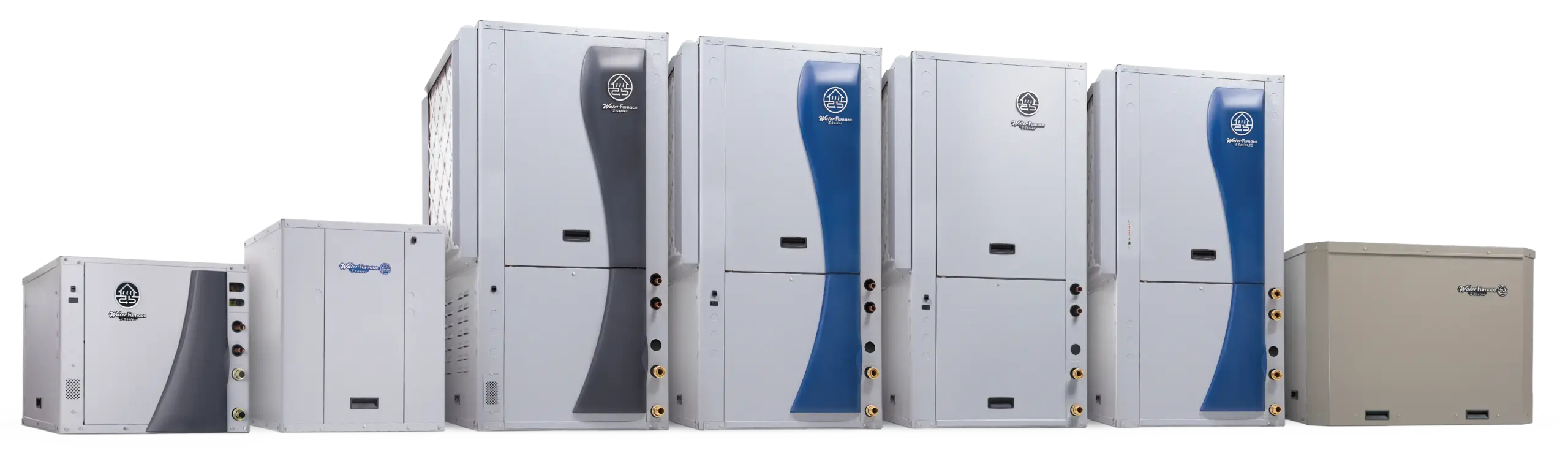
WaterFurnace offers a range of geothermal heat pumps designed to provide dependable comfort in winter and summer. Different configurations accommodate different heating, cooling and distribution needs.
Our role is to help determine which equipment and ground-loop design make sense for your particular home, rather than starting with a predetermined model.
Geothermal Equipment Options
Different Homes Need Different Solutions.
WaterFurnace manufactures several types of geothermal systems. The appropriate configuration depends on your home's heating and cooling needs, how comfort is distributed throughout the building, and the installation conditions.
The Right System Is More Important Than the Biggest System.
GeoFurnace uses heat-loss and heat-gain evaluations to help select appropriate equipment capacity, then considers the ground exchanger, ductwork or hydronic distribution system, and the home's overall performance.
We Install WaterFurnace. We Service All Makes.
Although WaterFurnace is our primary geothermal equipment brand, GeoFurnace technicians service geothermal heating and cooling equipment from all manufacturers. Whether you're considering a new system or need help with the equipment already in your home, our team can help.
Geothermal Experience in Northern Michigan
Why Choose GeoFurnace for Geothermal?
Installing a geothermal system takes more than selecting equipment. Your home's heating and cooling requirements, the ground-exchange design and the installation all need to work together. GeoFurnace brings a history rooted in geothermal technology to every project.
We Started With Geothermal.
When GeoFurnace began in 1990, geothermal heating and cooling was the company's original specialty. Long before offering the full range of HVAC services we provide today, our business was built around this technology.
We've since expanded into furnaces, boilers, air conditioning, heat pumps and other comfort solutions. But geothermal remains an important part of who we are.
Experience Matters at Every Step.
Here's how we approach geothermal projects, from the first conversation to ongoing service.
-
Understand the Home First
We examine your existing heating and cooling system, comfort concerns, building characteristics and goals. Detailed heat-loss and heat-gain evaluations help determine the home's actual equipment capacity requirements.
-
Design the Complete System
The geothermal heat pump is only one component. We consider the ground exchanger, equipment selection, distribution system and property conditions as parts of the overall design.
-
Install, Test & Verify
Proper installation and commissioning are essential. Equipment connections, circulation, airflow or water flow, controls and system operation must be checked against the approved design and manufacturer requirements.
-
Support the System After Installation
Your geothermal system needs knowledgeable service throughout its operating life. GeoFurnace provides geothermal maintenance, diagnostics and repairs, including equipment from manufacturers other than WaterFurnace.
A company with roots in geothermal heating and cooling, not simply a recent addition to its services.
Equipment recommendations based on the building's actual heating and cooling demands.
WaterFurnace is our primary equipment brand, but our service extends to all geothermal makes and models.
You Don't Have to Be a GeoFurnace Installation Customer to Call Us.
If your existing geothermal system needs maintenance, diagnosis or repair, our team can help. We service all makes and models of geothermal equipment, whether the system was installed by GeoFurnace or another contractor.
Geothermal Installation Costs
How Much Does Geothermal Heating & Cooling Cost?
Geothermal is a substantial home investment, so we believe homeowners deserve realistic pricing information. Your final installation cost depends on the home, the property and the system that needs to be designed.
Why Such a Wide Range?
Every geothermal installation is different. The project may include an indoor heat pump, ground exchanger, drilling or excavation, piping, electrical work and changes to how the home distributes heating and cooling.
This range is for early planning, not a guaranteed price or a substitute for a property-specific proposal. Complex installations may exceed the upper end.
What Affects the Installation Price?
Home Size & Heating Load
Proper equipment selection begins with the home's actual heat-loss and heat-gain requirements, not just square footage.
Ground-Exchange Design
Horizontal trenches, vertical boreholes and other suitable arrangements have different site-work requirements.
Equipment Configuration
Heat pump capacity, forced-air or hydronic equipment, controls and selected features affect the overall project.
Property Conditions
Geology, access for drilling equipment, soil conditions and site restoration can influence installation costs.
Existing Ductwork & Distribution
A home's present ducts or hydronic system may be suitable, require modifications or need a more substantial redesign.
Electrical & Related Work
Power requirements, mechanical space, plumbing connections and other installation needs vary by property.
Look Beyond the Installation Price.
Geothermal systems can offer efficient heating and cooling, but operating savings vary. We recommend comparing the full system investment against expected energy consumption, local utility rates, maintenance, and the equipment being replaced. We won't promise a specific payback period without evaluating your home.
View GeoFurnace HVAC PricingExplore Financing Options.
A geothermal installation is a major purchase. Ask GeoFurnace about available financing programs and payment options. Financing availability, rates and terms are subject to program conditions and approval.
Learn About FinancingCommon Geothermal Questions
Geothermal FAQs
From Northern Michigan winters to ground loops and maintenance, here are answers to questions homeowners frequently have about geothermal systems.
Does geothermal really work in Northern Michigan winters?
Yes. Geothermal heat pumps exchange heat with the ground rather than relying directly on extremely cold outdoor air. Ground temperatures are more stable than outdoor air temperatures, making geothermal a practical heating option for cold climates.
System sizing and design still matter. Depending on the home and equipment, supplemental heating may be included for peak conditions.
Can geothermal be installed in an existing house?
Often, yes. Existing homes can be evaluated for geothermal installation, including homes that currently use furnaces or other heating systems.
We evaluate the home's existing distribution system, heating and cooling loads, electrical requirements and available ground-loop options before recommending a conversion.
Will geothermal installation tear up my entire yard?
Not necessarily. Horizontal ground loops require excavation across the loop area, while vertical systems use drilled boreholes and typically disturb a smaller surface footprint.
The amount of disruption depends on the ground-loop design, property access and site conditions. We can explain the likely scope of work during planning.
How long does a geothermal system last?
Geothermal systems are designed for long service life. The U.S. Department of Energy cites average life expectancy of more than 20 years for geothermal heat pump equipment and approximately 25 to 50 years for underground infrastructure.
Actual service life depends on design, installation, maintenance, operating conditions and other factors. These estimates are not equipment warranties.
Does geothermal need regular maintenance?
Yes. Although buried closed-loop piping generally requires relatively little routine attention, the indoor equipment still needs regular professional maintenance.
Service can include checking filters, airflow or water flow, electrical components, condensate drainage, controls and overall system operation as applicable.
Can geothermal also heat domestic hot water?
Some geothermal systems can assist with domestic hot-water production using compatible equipment, such as a desuperheater, or through a suitable water-to-water configuration.
Hot-water capability is not universal, and output depends on system design and operating conditions. We can review whether it makes sense for your application.
Is the 30% federal geothermal tax credit still available in 2026?
No. The federal Residential Clean Energy Credit previously available for qualifying geothermal heat pumps is not available for new installations completed after December 31, 2025.
Other programs or utility incentives may vary by location and over time. Confirm current eligibility before including any incentive in your budget. For federal tax information, visit the IRS Residential Clean Energy Credit page.
Does GeoFurnace service geothermal brands other than WaterFurnace?
Yes. WaterFurnace is GeoFurnace's primary geothermal equipment brand for installations, but our technicians provide service and repairs for geothermal systems from all manufacturers.
You don't need to have purchased your system from GeoFurnace to contact us for geothermal service.
Geothermal Consultation & Service
Ready to Explore Geothermal? Let's Talk About Your Home.
Whether you're building a new Northern Michigan home, considering geothermal for your existing home, or need help with a system that's already installed, GeoFurnace is ready to help you understand your options.
-
Planning a New Geothermal System?
Let's discuss your home, property, heating and cooling goals, and possible WaterFurnace system options.
-
Thinking About Converting to Geothermal?
We can evaluate an existing home's heating and cooling needs, distribution system and available ground-loop options before recommending a solution.
-
Need Geothermal Maintenance or Repair?
GeoFurnace services all geothermal makes and models, not only the WaterFurnace equipment we primarily install.
24/7 HVAC Service Available
231-943-1000Need urgent heating or cooling assistance? Call us directly. After-hours and weekend emergency service rates differ from regular business-hour rates.
Ask about available HVAC financing options for qualifying projects. Our team can also help explain the factors behind your geothermal installation estimate.
Start the Conversation.
Tell us what you're considering or how we can help. A member of the GeoFurnace team can follow up to discuss the next steps.
This form is for general inquiries and consultation requests. For urgent service, please call 231-943-1000 directly.